The story about the Sami-people
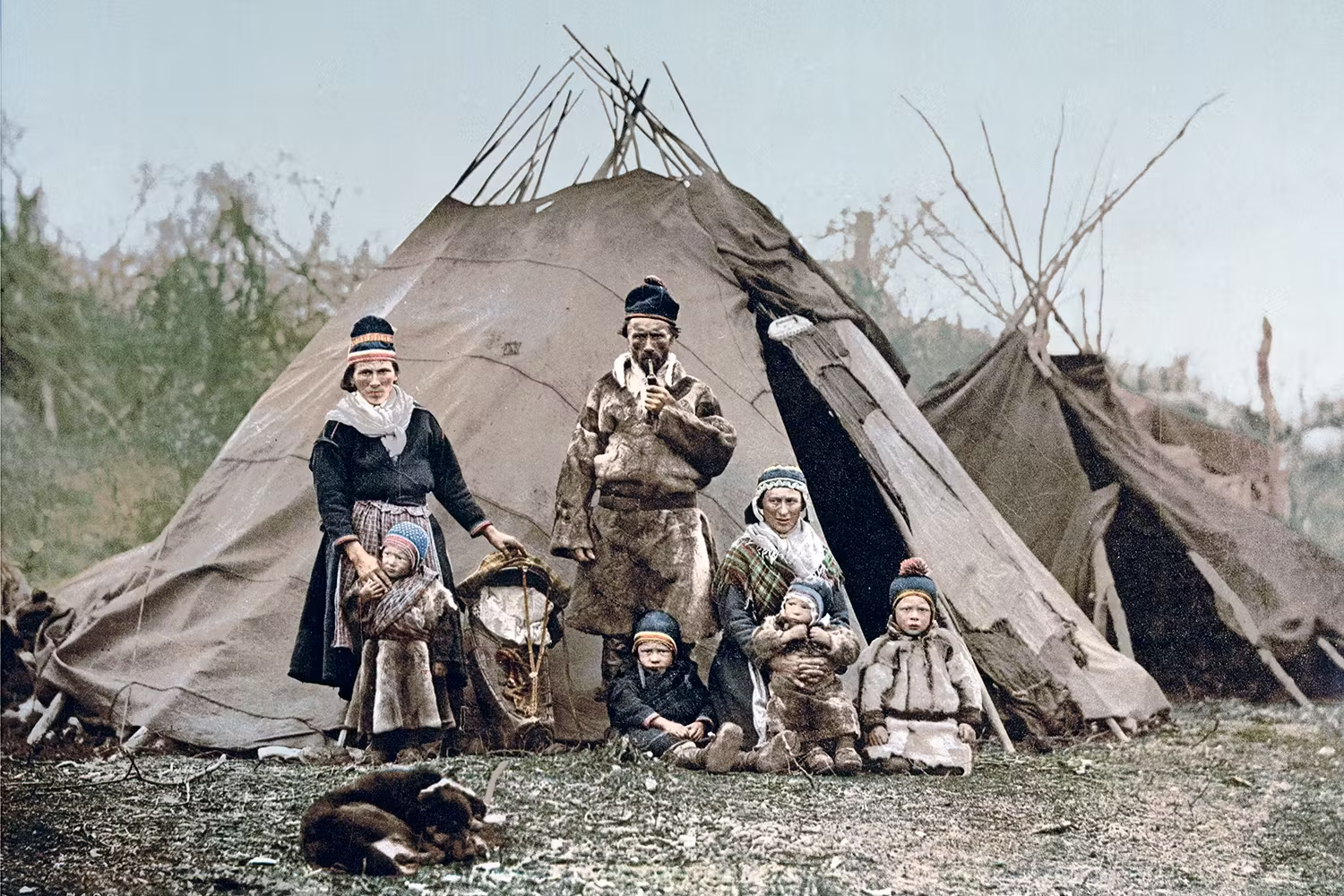
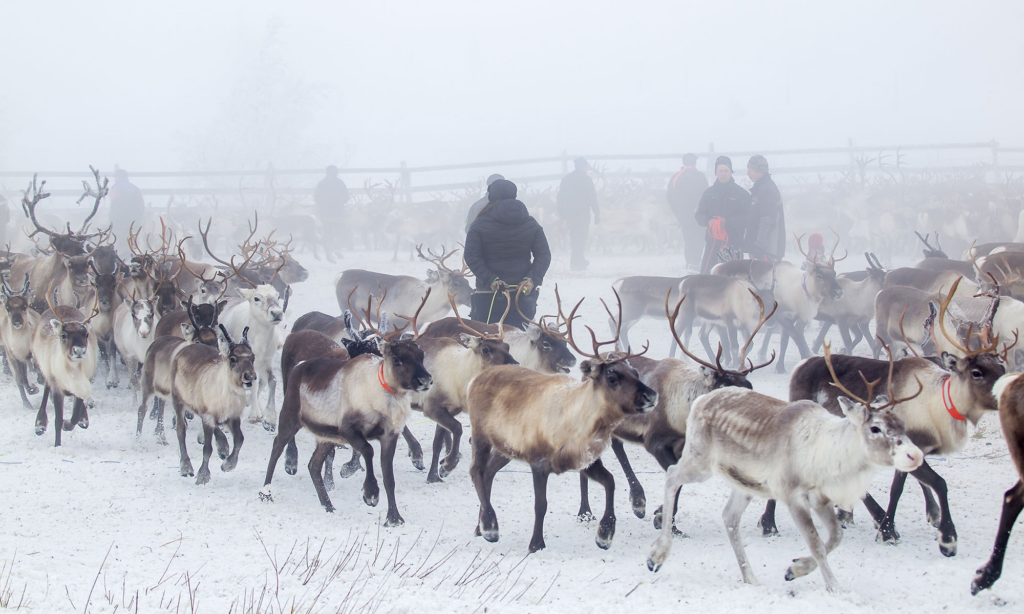
Once upon a time there was a group of people spread out over all of Scandinavia. They were food-gatherers, hunters and fishermen who wandered across vast land of forests and moors. These people called themselves ”Sapmilaccat”, the Sami people. They hunted wild reindeer and elk using the bow and arrow or pitfalls and other kinds of traps. In the winter they made round tipis covered with turf and they walked on the snow with skis. In the summer they lived in lavvus, which looked very much like Indian tipis. In the middle of the tipi was the fireplace. On one side were the opening and the firewood. On the other side was the kitchen. The ground was covered with birch twigs and reindeer skins, which made it warm and cosy when it was time to sleep.
In the land the Creator had given the Sami there were enough food, fish, meat and berries for everybody. Nobody could own the land, the air or the water – the gifts were there for everyone who needed them, human beings and animals. The Sami was a peaceful people group. In their language they didn’t even have a word for war. Instead they had many words for snow and reindeer. The saddest thing was that the Samis forgot God, who had created them and started to pray to many gods and to worship nature. The medicine man, the noaiddi, was an important person and his most important tool was the drum. The Sami way of singing to the gods and remembering people or events was called the joik.
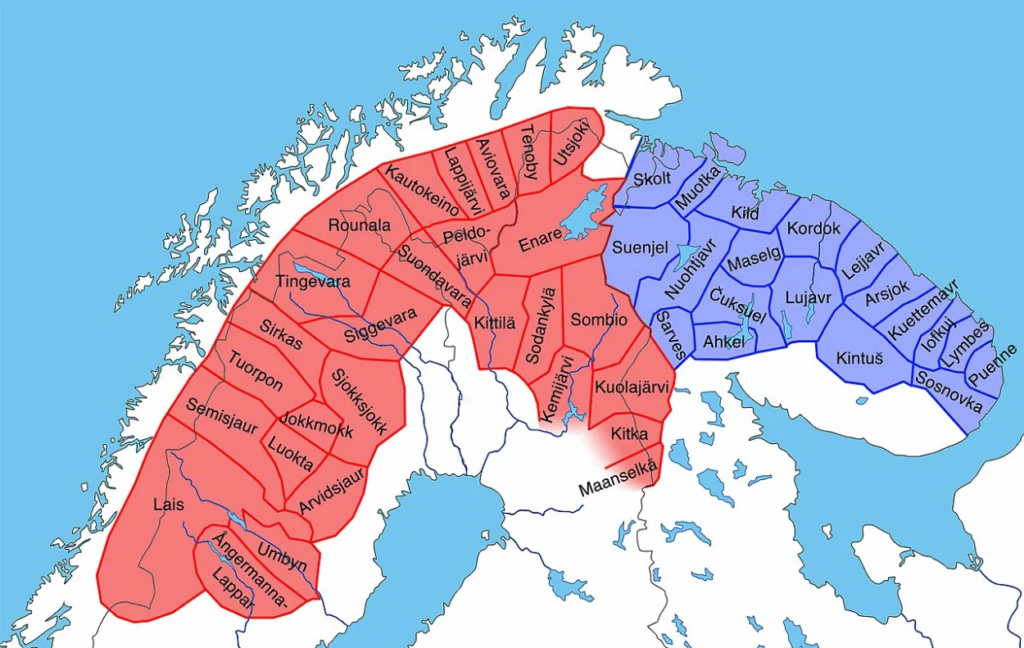
Other peoples came into the land and the Sami traded goods with them; fur, meat, salt and flour. There was still enough room for everybody. After some time more people came and made the Sami move further north. The young Nordic states grew. They called the Sami Laplanders and their land was called Lapland. Many kings made the Sami pay taxes to them. The kings divided the land between themselves and the Sami were scattered in four different countries: Norway, Sweden, Finland and Russia. The white man, the farmers, the colonisers had entered the land and the kings said it was their land. New laws were passed. Conditions changed for the Sami, now living in smaller and smaller areas herding their reindeer, and making a living from fishing and hunting. The group of Sami had become a minority in the land.
There were times when the great God himself visited the Sami people. Revival meetings were held in lavvus and many gave their hearts to the Son of God, who has died for the sins of all people. But the priests didn’t like the Sami way of singing and the drums were burnt. The white man feared the power of the drum and the joik.
The Nordic kings did their best to make the Sami assimilate into their societies. Many of the whites looked upon the Sami people as if they were children who needed help. Others meant that they were unable to rise to higher levels of civilisation, a people doomed to go under. The kings decided the Sami children should go to school. Many children had to leave their parents and go to boarding schools, where they had to stay for months without being able to visit their parents. Small children no longer learnt reindeer husbandry from their parents. In other schools boys and girls were punished if they spoke their mother tongue. Many families had to take Norwegian or Swedish names in order to buy land, build houses or get employment. The Sami language was an ugly and unnecessary language. It was better to learn Norwegian or Swedish, because those languages belonged to the future. Roads and railroads were built. Mines and hydroelectric power stations were built. The reindeer herders got fewer. Environmental pollution and decisions from the government made it almost impossible to herd reindeer anymore. Eventually many Sami forgot where they came from and some even despised their heritage. The loss of identity is a silent cry that can be heard everywhere if you listen hard.
I don’t yet know, if this story will have a happy or a sad ending. The Sami people still exist. The culture, the language, the people are still here. But the rejection, the hurt and the division have affected their souls. The injustice has created deep wounds even between the Sami. More than half of the Sami cannot speak their own mother tongue. Many scorn and say: ”Look at them. They are always fighting”. But few ask: ”Why? How did that come about? What can we do to change the future? Where is the road to reconciliation and restoration?”
I don’t yet know, if this story will have a happy or a sad ending. The Sami people still exist. The culture, the language, the people are still here. But the rejection, the hurt and the division have affected their souls. The injustice has created deep wounds even between the Sami. More than half of the Sami cannot speak their own mother tongue. Many scorn and say: ”Look at them. They are always fighting”. But few ask: ”Why? How did that come about? What can we do to change the future? Where is the road to reconciliation and restoration?”
My hope is that the Sami people will return to their true origin. The Creator is still waiting for them. He hasn’t rejected them. He never intended to take the joy, the colours, the joik, or their instruments from them. Their way of expressing themselves is his fingerprint of variety and creative joy. But after all that has happened to the Sami their tears need to be dried away. When the love of God touches them, they can forgive and receive forgiveness. There the restoration will start and then – we can all live happily together ever after.
Marie Enoksson, Kiruna, 1998